|
|
|
All about extra virgin
olive oil |
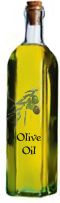
So, you want to
reduce saturated fat and trans fat in your diet.
You've heard that some of the best fat for you
is found in olive oil. But, how do you select
the best olive oil?
When you go to the store, there is a startling
array of olive oil products on the shelves. Not
only are there different brands and sizes, there
are countless varieties with labels that say
things like cold-pressed, virgin, pure, light,
extra virgin and first pressing. To add to the
confusion, there are seasoned olive oils,
infused with herbs and spices. The health
benefits of consuming olive oil – which has been
shown to decrease the bad cholesterol and
increase the good cholesterol in the blood
stream – have encouraged more brands and
variations into the market.
Olive oil is made from olives. There are
hundreds of different types of olives
 and they
can each be graded for quality and acid content.
The oil is extracted when the olives are
squeezed or pressed; the oil is then strained
and refined. Different processes can be used to
press the olives; these account for the terms
"expelled pressed," "cold pressed," and "mechanically pressed" on the olive oil labels.
Since these terms are not standardized, it is
difficult to determine what each term means for
each particular brand of olive oil. and they
can each be graded for quality and acid content.
The oil is extracted when the olives are
squeezed or pressed; the oil is then strained
and refined. Different processes can be used to
press the olives; these account for the terms
"expelled pressed," "cold pressed," and "mechanically pressed" on the olive oil labels.
Since these terms are not standardized, it is
difficult to determine what each term means for
each particular brand of olive oil.
The term extra virgin does have a standard
definition as it applies to olive oil. In order
to be labeled extra virgin olive oil, an olive
oil product must be made only from the top grade
of olives and they must have less than one
percent of acid content. In addition, extra
virgin olive oil is always made from the first
pressing of the olives. Oil made from second and
third pressings is lower quality and usually has
inferior flavor. Extra virgin olive oil is not
heated when it is pressed – it uses a process
known as cold pressing – and most people feel
this leads to a higher quality oil as well. With
all of these advantages, it is clear that extra
virgin olive oil is the best quality. Most
discerning chefs refuse to use anything but
extra virgin olive oil for their cooking.
While selecting extra virgin olive oil narrows
the field, there are still many choices. The
type of olive and the processing both affect the
flavor and characteristics of each individual
oil. Good extra virgin olive oil should have a
nice texture and consistency. Avoid oils that
are too thin or that are viscous or thick. The
best extra virgin olive oils have a fresh green
color and a delicate yet distinctive zesty
taste.
The only way to really find the best extra
virgin olive oil is to taste several. You may
find that you want to stock several extra virgin
olive oils, since the characteristics of each
will complement different foods and uses. For
example, you may want to use one extra virgin
olive oil for salad dressings or just dip your
bread into it to eat, while you use another
extra virgin olive oil for cooking your marinara
or pizza. If you only purchase one oil, do not
select a flavored variety; seasoned olive oils
are novelty items that are used for specific
purposes and cannot be used in as versatile of
ways as plain extra virgin olive oils.
|
|